
Adventures in Time and Space
Biggest Range Ever
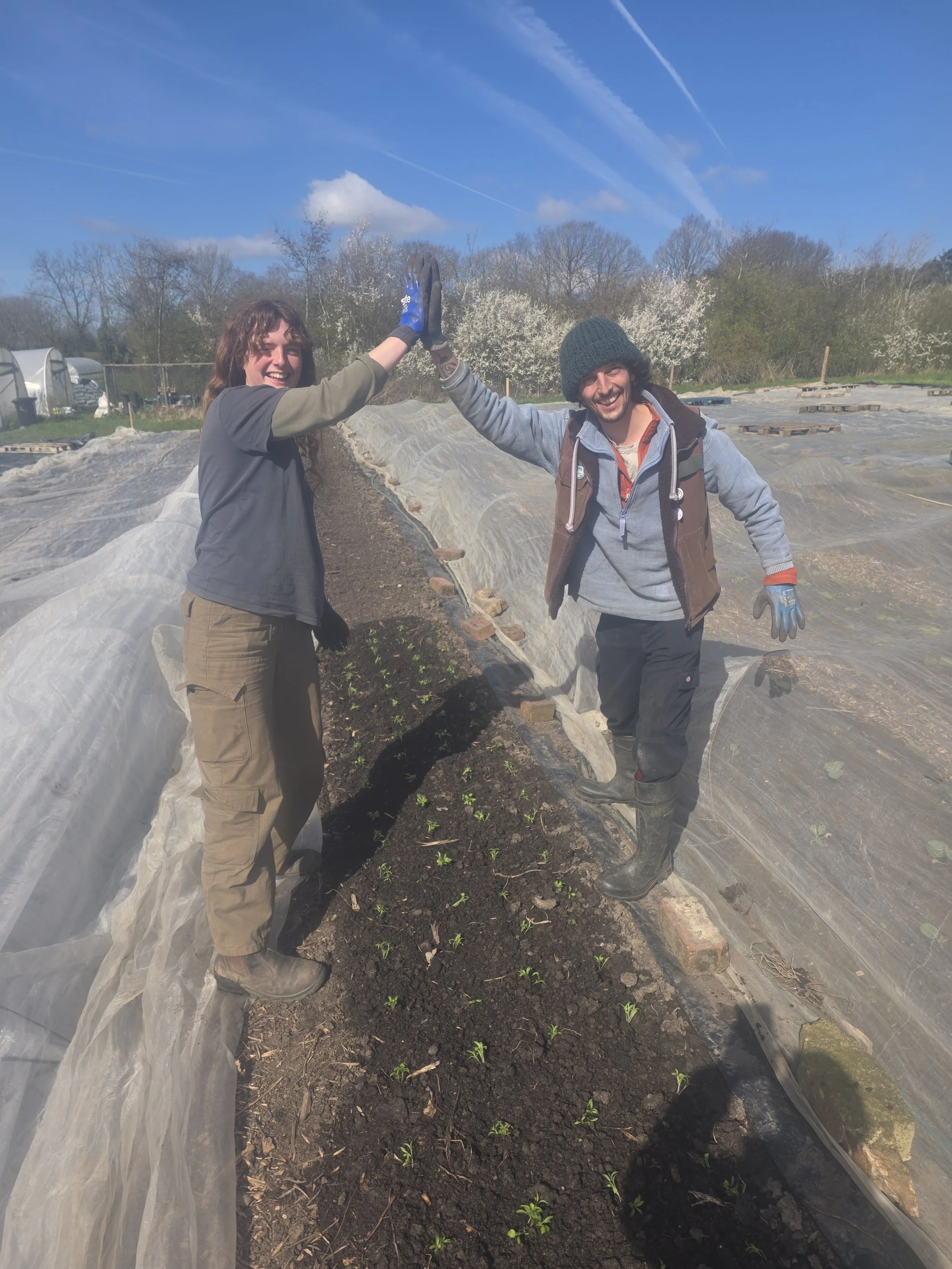
Pippa and Jacob high-five after planting yet another crop in double quick time
With around two-thirds of an acre under outdoor vegetable production, a third of an acre of orchard, and about 200 square metres of polytunnel space, we are a fairly typical size for a market garden. I’m sure we seem huge to the average gardener, but we are, of course, minuscule compared to the average farm. What we lack in scale, however, we make up for in intensity—both in time and space. There are almost endless permutations in our crop planning possibilities, and with a bit of ingenuity we can arrange our cropping to produce the maximum yield from a relatively small area of land.
Whereas many farms growing vegetables will have just one crop per year in a single field, we aim to achieve a minimum of two—and sometimes three—crops in most of our beds. We can do this because of our minimal-till (no-dig) system and the specialist tools we use. These include a two-wheel tractor with a rotavator and roller attachment, which prepares a perfect bed for planting in no time at all, and the Gridder, which rolls over the beds to create a planting grid. This shows exactly where each transplant should go, enabling our growers to plant at speed (see picture below).
All this ingenuity, built up over the years, means that this season we have a much greater range of crops than before, and far more early crops—we’ve never had so many. For example, before our main crop of kale goes in, we grow Chinese cabbage, turnips, red kohlrabi, and an early white cabbage. As shown in the picture (bottom), we also have spring onions planted down the middle of a bed of Little Gem lettuce in one of the polytunnels, and outside our first crop of broad beans in many years is growing strongly—these will be followed by chicory at the beginning of July.
All this careful application of ingenuity certainly makes market gardening an adventure in both space and time!
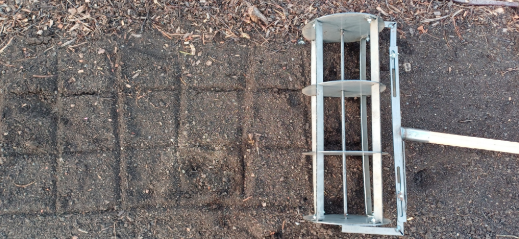
The gridder marking out beds
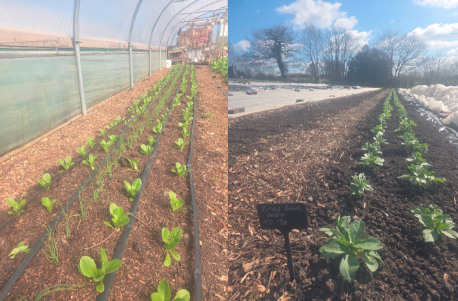
Lettuce and spring onions (left), broad beans (right)