Small Growers Pack a Mighty Punch
Local, Organic and Resilient
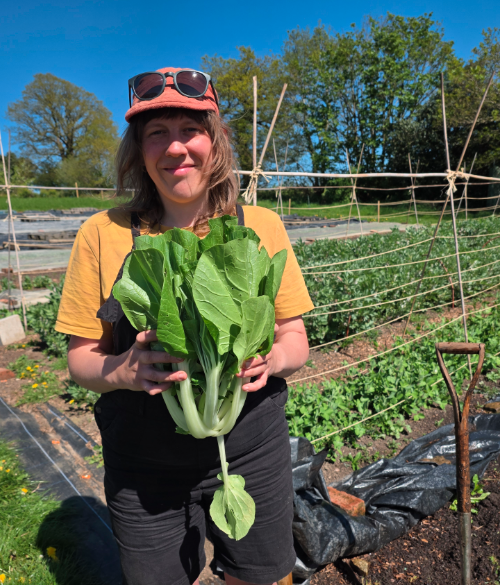
Ellie with one of our splendidly large pak chois
With so much turbulence in the world at large, it is reassuring to know that organic farms and market gardens are far more resilient to shocks than the complex global supply chains that supermarkets rely on. In contrast to the corporate giants, small-scale growers and retailers like ourselves work with short supply chains that are inherently more robust, often more flexible, and able to respond more quickly to changing circumstances. You could imagine the global food system as a large tanker — hard to change course and slow to get going once stopped — in comparison to smaller, interconnected farms and gardens, which are like a fleet of much smaller boats: speedy, nimble, and better able to navigate towards calmer waters when things get choppy.
Furthermore, organic systems, by design and principle, do not rely on artificial fertilisers. In fact, the best organic and biodynamic enterprises aim for as much self-sufficiency in fertility as possible through animal and green manures. As such, when fuel prices rise — affecting artificial fertiliser costs — organic systems do not bear the brunt in the same way. We think that’s a far more sensible system overall, as well as being far better for the soil, ecosystems, and the planet.
Of course, we can grow inherently healthier produce too. The pak choi we harvested this week is looking stunning, and the broad beans in the polytunnel are on the verge of cropping — all very exciting. So, as we progress through what has been a great spring so far, we can feel positive that we — along with the other small and medium-sized farms and market gardens we rely on for our supplies — definitely punch well above our weight when it comes to food security.
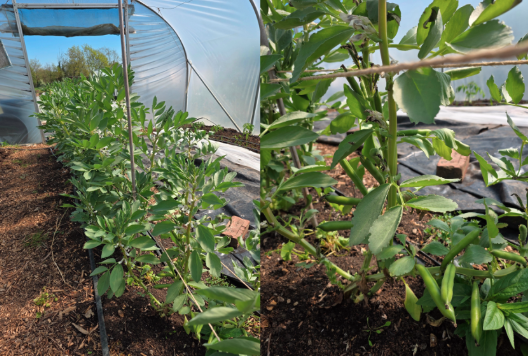
Broad beans - harvesting soon!